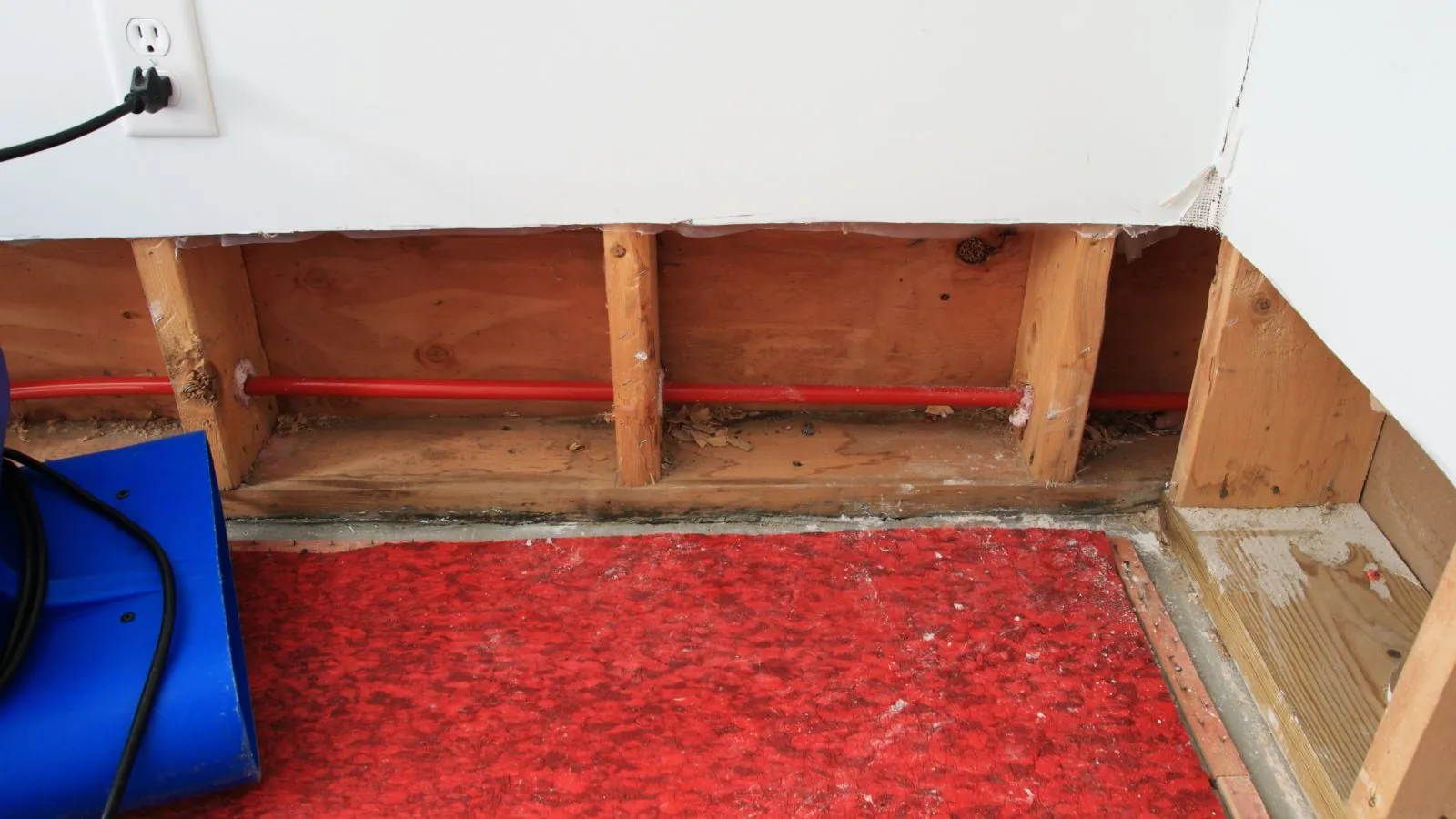
The line between a spill and a loss
A cup of water on a tile floor is a spill. Water that has run into a wall, under flooring or through a ceiling is a loss. The difference is not the amount alone. It is whether the water reached materials that hold it, such as drywall, carpet pad, subfloor or insulation. If it did, the surface may look dry within hours while the structure stays wet.
The checklist below is meant to help you decide quickly. When in doubt, a moisture meter reading is cheap compared with a repair that follows a wrong guess.
Safe to handle yourself
- A small spill of clean water on a hard floor that you can mop up in minutes..
- A damp rug or towel that can be hung outside to dry..
- Condensation on a window or a pipe..
- Water from a faucet, tub or sink that overflowed briefly and did not reach carpet, baseboards or cabinets..
- A small amount of water caught in a bucket under a drip, as long as the drip has been stopped..
Even in these cases, check the area again the next day. If a baseboard feels cool and damp or a smell appears, a meter can confirm whether water is hiding.
Not a DIY job
- Water that has been standing for more than a day..
- Any water from a sewage backup, a toilet overflow with waste or a flood..
- Water that soaked carpet and pad, drywall or insulation..
- Water near electrical outlets, the panel or appliances..
- Water that came through a ceiling..
- A leak whose source you have not found or stopped..
- A musty smell that persists after drying..
These situations involve contamination, hidden moisture or safety risks. The pages on sewage backup and flood damage explain why contaminated water needs protective gear.
How to dry a small clean spill well
- Stop the source and unplug anything near the water, only if the floor and the plug are dry..
- Soak up standing water with towels, then use a wet vacuum on hard floors..
- Lift rugs and furniture, and put foil or blocks under legs..
- Open windows and run a fan or two across the area..
- Run a dehumidifier if you have one, and close the room so it works on that space..
- Check the area for dampness the next day and again after two days..
Do not use a household vacuum on water, and do not use heat guns or space heaters on wet floors.
Why equipment matters for bigger losses
Professional drying uses air movers, dehumidifiers and moisture meters because water behind and below surfaces needs airflow and humidity control. A household fan moves air, but the room humidity can rise and send the moisture into other materials. A professional setup is a closed system designed to remove water from the air.
The structural drying page describes what each piece of equipment does and how readings are used to decide when to stop.
Time is the real deadline
Water gets into more materials the longer it stays. A common rule of thumb in the trade is that the first day or two matter most, because drywall, carpet pad and wood begin to swell and hold water. If you are on the fence, it is usually less costly to ask for help early.
Simple drying steps that help
For a small clean water leak, quick action can prevent a bigger problem. Mop or blot up the water, open windows if the weather allows, and run fans and a dehumidifier. Lift furniture off wet carpet and place foil or plastic under the legs. Remove wet rugs and hang them to dry outdoors.
Check back every day. Surfaces can feel dry while the material behind them is still damp. A cheap moisture meter helps you see what your hand cannot. If readings stay high after two or three days, the material may need professional drying or removal.
When to stop and call for help
- The water was not clean, such as sewage or river water..
- More than a small area is wet, or water has entered walls or the ceiling..
- A strong musty smell remains after a day or two..
- Readings on the wall or floor are still high after drying..
- Anyone in the home has breathing problems or allergies..
Home drying works for small, clean spills caught quickly. Beyond that, professional equipment and monitoring make a real difference.
Professionals use the ANSI/IICRC S500 standard to decide how long materials may stay wet, which is why home drying works best on small, clean spills caught within a day.
Local note for Wheeling, WV
The City of Wheeling requires a building permit for any structural, electrical, plumbing or building alteration in the city. A small spill clean up does not need one, but if you start cutting out drywall, replacing a pipe or altering wiring, stop and check with the Building Code Services office or a licensed contractor first.
Homeowners in Benwood and Glen Dale should check with their own city offices, since each city sets its own rules.
Common questions
Is it safe to use a wet vac on a flooded floor?
For a small clean water spill on a hard floor, yes, as long as you are not standing in water near electrical equipment. Not for sewage or flood water.
Can I dry drywall with a fan?
A fan alone rarely dries wet drywall. If the drywall was soaked, a meter reading is needed.
How do I know if carpet pad is wet?
Press on the carpet. If water squeezes out or the carpet feels cold and heavy, the pad is wet.
If I cut into a wall in Wheeling to dry it, do I need a permit?
Cutting drywall to dry a wall is usually not the kind of alteration a permit covers, but plumbing, electrical and structural changes are. Confirm with Building Code Services.