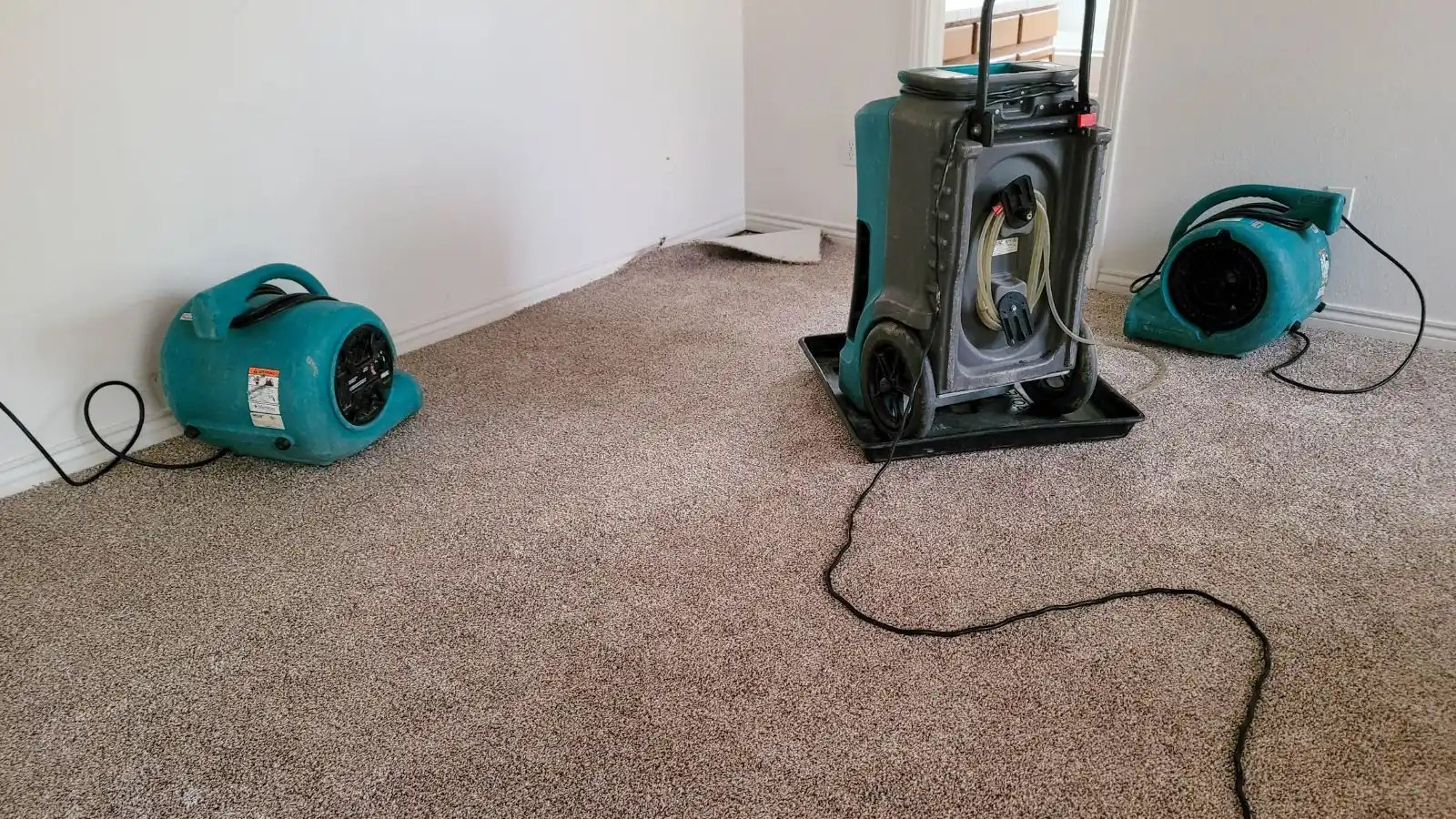
Water extraction is the first hour of any serious water loss
Water extraction is the process of pumping and vacuuming standing water out of a building so the structure can begin to dry. In Wheeling, WV, it is usually the first physical step after a pipe failure, a backed up drain or river water entering a lower level. Nothing else on the job can be measured properly until the floor is clear.
This page covers pure water removal. If the problem is a specific source, such as a burst supply line or a sewage backup, those pages explain the source-specific steps. If the water is already gone and the walls are still wet, the next stage is structural drying.
When standing water is an emergency
Water on the floor is an emergency whenever it is still rising, whenever it is touching outlets, baseboard heaters or an electrical panel, or whenever it has been there long enough to soak into drywall and subfloor. Our dispatch line is open 24/7, including nights and weekends, so call as soon as you see it.
While you wait, stop the source if you can do it safely. Shut off the main water valve, lift furniture legs and small valuables out of the water, and keep children and pets away. If any water is near the panel or a plugged in appliance, stay out of the room, cut power only if the panel is dry and reachable, and call the utility or 911 about any electrical or gas risk before you call us.
How water removal is done in a house or building
Crews start by identifying the water category. Clean supply water is treated differently from gray water out of a washing machine or black water from a sewer line, and the category decides which materials can stay and what protective gear is needed. Then the water is pulled out with the tool that fits the depth.
| Situation. | Tool used. | What it does. |
|---|---|---|
| Shallow water on hard floors. | Wet vacuum or squeegee extraction. | Lifts the film of water that would otherwise soak into seams and baseboards. |
| Several inches of standing water. | Submersible pump with discharge hose. | Moves bulk water outside or to a floor drain, fast. |
| Saturated carpet and pad. | Truck mount or portable extraction wand. | Pulls water out of the fibers so the pad can be assessed or removed. |
| Water trapped under flooring. | Injection and suction drying mats. | Draws water from the subfloor layer without tearing everything out. |
After extraction, a moisture meter and a thermal camera show where water traveled. Wet drywall, pad and insulation are the usual trouble spots. Those findings set the scope of work for drying, which is written down before the repair work begins.
Why Wheeling basements and low rooms collect water
A great deal of the housing around Wheeling sits on hillsides with finished or unfinished basements at the low point of the structure. When a drain backs up or a supply line lets go, gravity sends the water down to the lowest room, and that room is often where the water heater, furnace and laundry sit. That is why extraction calls here so often start with a basement or ground floor.
Wheeling also sits on the Ohio River and its creeks. Rising river water is a separate flood event and is covered on the flood damage page. The City of Wheeling publishes a floodplain map through its Building Code Services office, so check the map for your address if you are unsure whether your property is in a flood area.
What happens if extraction waits
Water moves faster than most people expect. Within a few hours it wicks up drywall, swells baseboards and works under laminate. Carpet pad holds water like a sponge. Delay does not make the water easier to remove, and it widens the scope of work.
- Hardwood and laminate can cup or buckle once water sits under them for a day or more..
- Drywall and insulation take on water above the waterline through capillary action..
- Odors and surface growth can start when materials stay damp for days..
- Contents on the floor, such as cardboard boxes and rugs, are often lost if they sit in water overnight..
Cost factors for water extraction
Price depends on the water category, how many square feet are affected, how deep the water is, what materials are wet and how long the drying phase runs. A small clean water spill on tile is a short visit. A flooded finished basement with carpet and drywall is a larger job.
Insurance coverage varies. Sudden and accidental water damage is often covered, gradual leaks and neglect often are not, and flood damage is usually excluded and needs separate flood coverage. Check your policy or ask your insurer. If you want a real number for your situation, call (740) 231-9132 and the scope and price are explained before work starts.
Related help in the Wheeling area
Once the water is out, the same crew can handle wet carpet, drywall that wicked water, or a flooded basement. If you are across the river valley, the Marshall County crew coverage in Moundsville follows the same process.
Extraction is the first step in the ANSI/IICRC S500 process, and the category and class of the loss are set at this stage.
Questions about Water Extraction in Wheeling
Do you handle water extraction emergencies at night or on weekends in Wheeling?
Yes. The dispatch line is answered 24/7, including nights, weekends and holidays. A crew is sent as soon as one is available and we offer same-day response when available. Never wait for business hours when water is still on the floor.
How long does water removal take?
A small spill can be extracted in under an hour. A basement with several inches of water can take a few hours. Extraction is only the first phase, because walls and subfloors usually need days of drying afterward.
Can I just use a wet vac myself?
For a small clean water spill on a hard floor, yes. Do not use a household wet vac near standing water and plugged in electrical equipment, and do not use one on sewage. Large or contaminated losses need pumps and protective gear.
Does extraction include drying the building?
No. Extraction removes standing water. Drying uses air movers and dehumidifiers over several days. Both are usually quoted in the same scope of work so you can see them separately.
Will my insurance cover water removal?
It depends on the cause. Sudden and accidental events are often covered and flooding usually is not. Read your policy and ask your insurer, and keep photos of the water before anything is moved.