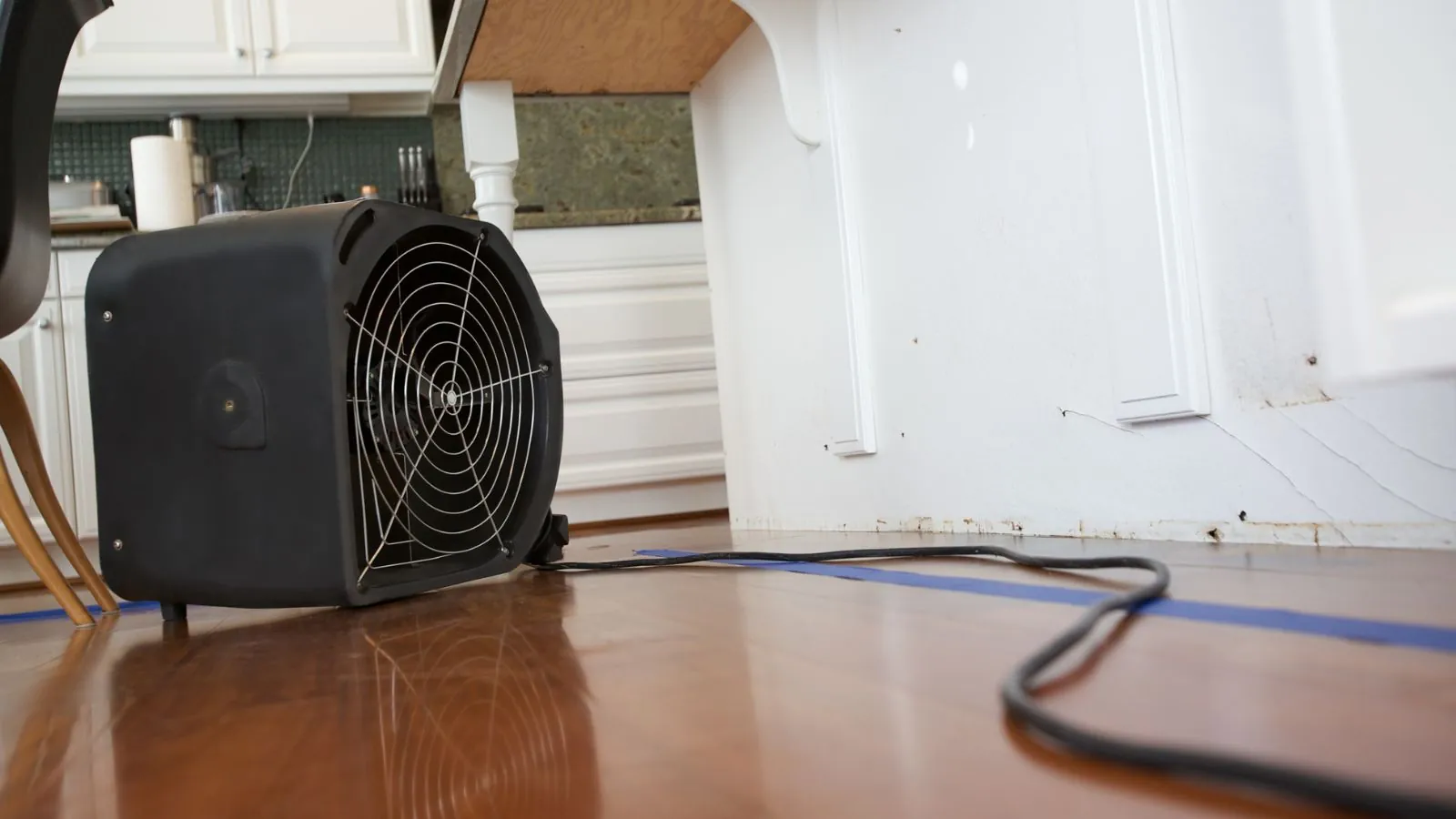
Kitchen water damage restoration in Wheeling, WV
Kitchen water damage restoration is the drying and repair of cabinets, countertops, flooring and walls after water gets into a kitchen. In Wheeling, WV, most kitchen losses start with the sink plumbing, a dishwasher or a refrigerator line. The kitchen has more water sources in a small space than any other room, and the cabinets can hide a leak for a long time.
This page is about the room and its finishes. When the appliance itself is the source, see appliance leak water damage.
Water under the sink, and what it does to cabinets
The cabinet under the sink is the most common spot. Supply lines, the drain trap and the garbage disposal all sit there. A slow drip soaks the cabinet floor, which is often particleboard. Once particleboard gets wet it swells and loses strength.
- A swollen or soft cabinet floor under the sink..
- Peeling laminate or veneer at the cabinet base..
- A musty smell when you open the door..
- Stains on the toe kick or the floor in front of the cabinet..
- Water marks on the underside of the countertop..
What gets wet in a kitchen loss
| Material. | What happens. | Common outcome. |
|---|---|---|
| Particleboard cabinets. | Swell and lose strength. | Often replaced. |
| Solid wood cabinets. | Can warp but dry well. | Often dried and kept. |
| Laminate countertops. | Edges swell. | Replaced if the core is wet. |
| Hardwood or vinyl flooring. | Cups or lifts. | Depends on the subfloor. |
| Drywall behind cabinets. | Soaks from the bottom. | Cut out if wet. |
Toe kicks can be removed so that air can reach the floor behind the cabinets. Drying behind cabinets is the most skipped step.
The cleanup process
The first step is to stop the leak and extract the water. Crews check the cabinets, the subfloor and the walls with a moisture meter. Toe kicks are pulled, and sometimes the back of a cabinet is opened for air. Drying mats and air movers dry the floor, and a dehumidifier handles the air.
Cabinets that are wet but solid may be dried and kept. Cabinets with swollen particleboard are usually replaced. Countertops may need to be lifted for access, and a plumber should reconnect the sink afterward.
Slow leaks versus sudden failures
A slow leak under a sink may run for months before it is seen. A sudden failure, such as a supply line popping off, can put a lot of water on the floor in minutes. The two are handled the same way physically but are often treated differently for insurance. Photograph and write down what you found.
Kitchens in older Wheeling homes
Older Wheeling homes often have kitchens that have been remodeled in stages, with new cabinets set over old subfloor and plumbing that has been extended. That mix means water can travel along old chases and soak into spaces you cannot see. If your kitchen has been through several remodels, ask the crew to check the floor edges and the wall behind the sink with a meter.
Cost factors and insurance
Cost depends on how much of the kitchen is wet, the cabinet type, the flooring and how many drying days are needed. Insurers often treat sudden leaks as covered and long term seepage as excluded. Read your policy or ask your insurer. To discuss a scope, call (740) 231-9132.
Related help
A kitchen leak may begin in a burst supply line or an appliance and spread to the hardwood floor and drywall. Drying is explained on the structural drying page.
Where kitchen water hides
Kitchens have more water lines per square foot than any other room. A supply line under the sink, a dishwasher inlet, a refrigerator ice maker tube and a drain trap can each leak slowly into the cabinet base, the subfloor and the wall behind. The cabinet often hides it, so the first sign may be a soft floor or a swollen cabinet toe kick.
Check the back corners of the sink cabinet and the area behind the dishwasher once a month. A flashlight and a dry paper towel pressed to the pipe fittings will show a small drip.
Cabinets and countertops
Particleboard cabinets swell when wet and rarely recover. Solid wood and plywood cabinets are more forgiving. The crew may remove toe kicks and drill small holes to dry the space behind the cabinet without taking it out. Stone and solid surface countertops are usually fine, but the cabinet below them may need work.
Safety checks before you start on kitchen water damage
- Turn off the water under the sink or at the main..
- Unplug small appliances and keep the cords away from the puddle..
- Do not run the dishwasher or garbage disposal if the cabinet is wet..
- Watch for sharp edges on swollen or broken cabinet panels..
If you are not sure a step is safe, skip it and call. Photographs and a clear description of the water are enough for the dispatcher to plan the work.
Kitchen losses are classed under ANSI/IICRC S500 by water category and by how much of the room and cabinetry absorbed moisture.
Questions about Kitchen Water Damage in Wheeling
Is a kitchen leak an emergency?
A running leak is. A slow drip can be scheduled, but both should be addressed quickly. The dispatch line is open 24/7.
Can swollen cabinets be dried?
Solid wood often can. Particleboard that has swollen usually cannot return to its original shape.
Do I need to remove the countertop?
Sometimes. If water is under it or in the cabinet base, access may require lifting it.
How long does it take to dry a kitchen?
Usually several days, depending on materials and moisture levels.
Does insurance cover water damage under the sink?
Sudden leaks are often covered and long term seepage often is not. Check your policy or ask your insurer.