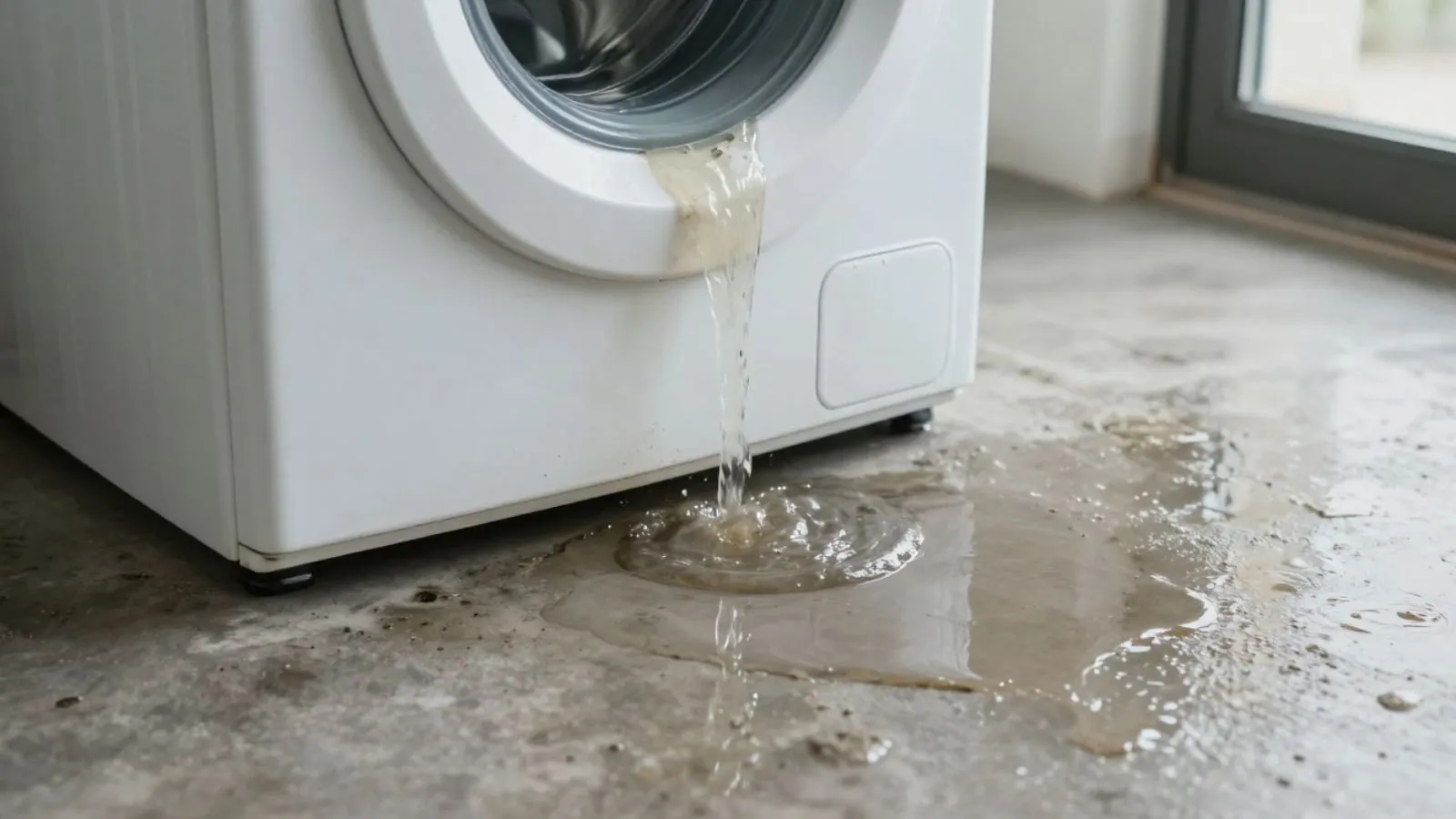
Appliance leak water damage in Wheeling, WV
Appliance leak water damage is the moisture and flooding that follows when a washing machine, dishwasher, refrigerator, water softener or similar appliance releases water through a supply hose, a drain line or a worn seal. In Wheeling, WV, laundry and kitchen appliances sit on first floors, second floors and in basements, so a leak can reach several levels before anyone notices.
This page focuses on the appliance as the source. Kitchen cabinets and under-sink areas are covered on the kitchen water damage page, and the water that ends up in the floor is handled as described on hardwood floors and carpet.
Appliance leak emergency steps
A supply hose failure is an emergency because it runs at full line pressure for as long as the valve is open. Call the 24/7 dispatch line when water is spreading. Same-day response is offered when available.
- Close the appliance shutoff valve, usually a small valve on the wall behind it. If you cannot reach it, shut the main valve..
- Unplug the appliance only if the floor and plug are dry..
- Pull the appliance out only if it is safe, since leaks often continue behind it..
- Soak up surface water and move rugs and boxes away..
- Take photos of the appliance, the hose and the water..
Which appliances fail and how
| Appliance. | Usual failure. | Where the water goes. |
|---|---|---|
| Washing machine. | Burst or loose supply hose, drain hose pops off. | Floors, ceilings below, walls. |
| Dishwasher. | Door seal, inlet valve or drain hose. | Under cabinets and into the subfloor. |
| Refrigerator or ice maker. | Supply line to the ice maker, drain pan overflow. | Under the unit and into the kitchen floor. |
| Water softener. | Valve or drain line. | Basement floor and walls. |
| Dehumidifier or humidifier. | Overflowing bucket or drain hose. | Carpet and baseboard. |
Slow leaks do the most damage
The expensive appliance leaks are the slow ones. A hose that weeps for weeks is invisible until the floor feels soft or a ceiling below stains. Check behind washers, under dishwashers and behind refrigerators a couple of times a year. Braided hoses can be replaced for a small cost, and replacing them every few years is a common recommendation from plumbers.
If you find soft flooring, a musty smell or a stain below an appliance, the leak has probably been active for some time. A moisture meter shows how far it spread and which materials need to come out.
Cleanup and drying
Crews extract water, pull baseboards where needed, and meter walls and floors. Dishwasher and refrigerator leaks often soak the subfloor and the back of base cabinets, which is hidden from view. Drying mats, air movers and dehumidifiers are used, and in some cases a section of flooring or cabinet toe kick must be removed to dry the cavity behind.
When the appliance is on an upper floor, the lower ceiling is checked too. The ceiling repair page explains what is done there.
Cost factors and insurance
Cost depends on how long the leak ran, whether the water reached a lower floor, what flooring is involved and how many drying days are required. Insurance treats sudden failures differently from long term seepage, and many policies exclude gradual leaks or neglect. Read your policy or ask your insurer. If you want a real number, call (740) 231-9132.
Related help
If the leak started in a wall behind a fixture, see wall and drywall water damage. If the appliance sits in a basement, see basement cleanup. A leak that began as a failed supply line may overlap with burst pipe damage.
Safety checks before you start on appliance leak water damage
- Unplug the appliance only if the outlet and the floor around it are dry..
- Shut off the supply valve behind the washer, dishwasher or refrigerator..
- Do not tilt or drag a heavy appliance across a wet floor, since it can crack the supply fitting again..
- Keep children and pets out of the room until the floor is dry..
If you are not sure a step is safe, skip it and call. Photographs and a clear description of the water are enough for the dispatcher to plan the work.
Under the ANSI/IICRC S500 standard, a supply line leak is typically Category 1 clean water, while a dishwasher or washer drain leak can be Category 2 gray water.
Single family neighborhoods such as Warwood see these losses often enough to have their own page of guidance.
Questions about Appliance Leak Water Damage in Wheeling
Do you handle appliance leak emergencies at night or on weekends in Wheeling?
Yes. Hoses fail overnight and on weekends, and the dispatch line is open 24/7. Close the shutoff valve and call. A crew is sent as soon as one is available. Same-day response is offered when available.
Where is the shutoff valve for a washing machine?
It is usually on the wall behind the machine, two small valves for hot and cold. If you cannot reach them, shut the main water valve.
Can I dry behind a dishwasher myself?
A small amount of water, yes. If the cabinet or subfloor feels soft or damp, or the leak ran for a long time, a moisture meter and drying equipment are needed.
How often should I replace washer hoses?
Many plumbers suggest every few years, and sooner if you see bulges, cracks or rust at the ends. Check the manufacturer recommendation.
Does insurance cover a leaking appliance?
Sudden leaks are often covered, but gradual seepage is often excluded. Read your policy or ask your insurer.