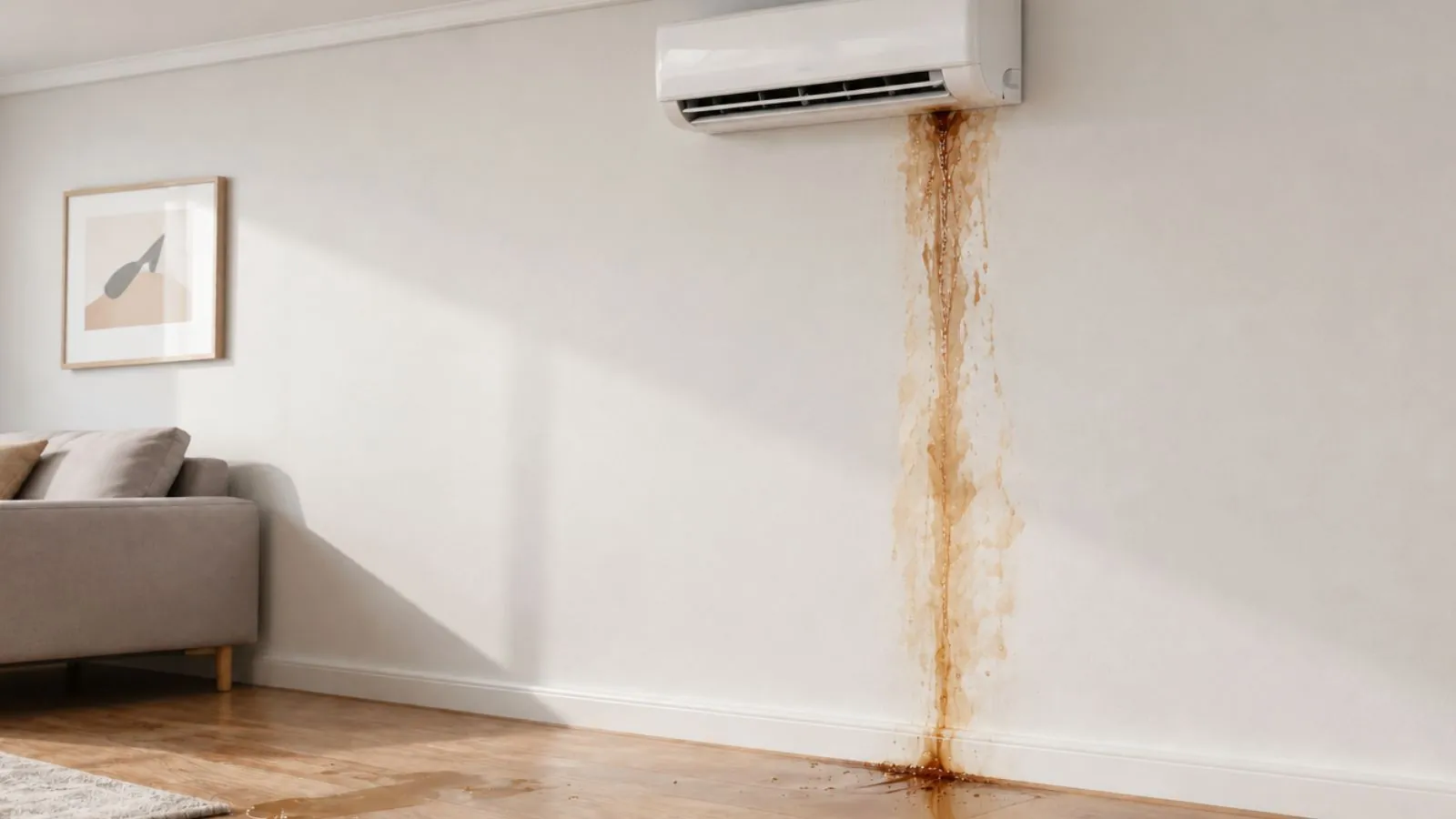
AC leak water damage in Wheeling, WV
AC leak water damage is the moisture that spreads when an air conditioner, heat pump or air handler drips condensate where it should not. In Wheeling, WV, the unit may be in an attic, a closet, a basement or on a roof or wall, and the water usually travels along the drain line or the duct before it shows up as a stain. It is a slow leak much of the time.
The repair has two parts. An HVAC technician fixes the unit or the drain line. A restoration crew dries and repairs what got wet. This page covers the second part.
Why air conditioners leak
Cooling air removes moisture from the air, and that water is supposed to leave through a condensate line. When the line clogs with algae and dust, the drain pan overflows. Pans also crack with age, and a float switch that fails will not shut the unit down.
- Clogged condensate drain line..
- Rusted or cracked drain pan..
- Frozen evaporator coil that melts and overflows..
- Improper slope on the drain line..
- A disconnected or cracked drain fitting..
- Refrigerant or airflow problems that cause icing..
Signs of an AC leak
Typical signs include water on the floor near the air handler, a stain on the ceiling below an attic unit, a musty smell near vents and an overflow pan that fills again after being emptied. Because the leak is often slow, a stain can appear days after the first drip.
If you see the drain pan full of water, turn the system off at the thermostat so it stops making more condensate. Do not keep running a unit that is dripping into insulation or drywall.
Drying and repair after an AC leak
Crews measure the moisture in the ceiling, insulation, framing and walls around the unit. Wet insulation is removed and drywall is cut out where it is soaked or sagging. Air movers and dehumidifiers are used to dry the cavity, and readings are checked each day.
| Unit location. | What gets wet. | Common action. |
|---|---|---|
| Attic air handler. | Insulation and the ceiling below. | Remove wet insulation, repair ceiling. |
| Closet or utility room. | Closet floor, baseboard, adjacent wall. | Dry floor and wall, replace baseboard. |
| Basement. | Floor and base of walls. | Extract and dry. |
| Wall mounted or mini split. | Wall below the unit. | Dry wall cavity, repair finish. |
A rust colored streak down a wall below a mini split, or a damp spot on drywall in a utility closet, often means the line has been leaking for a while.
Preventing repeat leaks
HVAC contractors often recommend an annual tune up that includes flushing the condensate line and checking the pan. A float switch on the drain pan can shut the unit off when water rises. Replacing a rusted pan before it fails is cheaper than repairing a ceiling.
Wheeling summers can be humid, so units run often, which means more condensate. If your unit is in an attic, consider asking a contractor about a secondary pan with its own drain.
Cost factors and insurance
Price depends on how long the leak ran, what materials are wet, the size of the affected ceiling or wall and the drying days needed. A single wet closet floor is a small job. A ceiling with wet insulation and a long term stain is larger.
Insurers often draw a line between sudden failures and long term seepage, and a slow condensate leak may be treated as gradual. Policies vary, so read yours or ask your insurer. For a real number, call (740) 231-9132.
Related help
The most common result of an AC leak is a stained or soft ceiling, covered on the ceiling repair page. When the unit sits near a finished wall, see wall and drywall water damage. The drying process is explained on the structural drying page.
Safety checks before you start on AC leak water damage
- Turn off the air conditioner or furnace at the thermostat and the breaker before you touch the unit..
- Stay away from any wet wiring near the air handler..
- Do not step onto a wet attic floor, since insulation can hide weak or soaked boards..
- Do not use a wet or dry vacuum on the drain pan if the unit is still powered..
If you are not sure a step is safe, skip it and call. Photographs and a clear description of the water are enough for the dispatcher to plan the work.
Condensate leaks usually involve clean water, which is Category 1 under the ANSI/IICRC S500 standard, but water that sits in insulation can slip into a worse category over time.
Questions about AC Leak Water Damage in Wheeling
Is an AC leak considered an emergency?
It can be. Active dripping into drywall or insulation should be stopped by turning the unit off. A slow, small leak can wait for a daytime appointment, and the dispatch line is open 24/7 if you need advice.
Should I turn off my air conditioner if it is leaking?
Yes, if water is dripping into a ceiling or insulation. Turn it off at the thermostat and call an HVAC technician.
Why is water coming out of my AC drain pan?
The condensate line is usually clogged or the pan is cracked. A technician can clear the line and inspect the pan.
Can a leaking AC cause mold?
Continued dampness in insulation, drywall or wood can create conditions for mold. Drying promptly lowers that risk.
Does homeowners insurance cover AC leak damage?
Sometimes. Many policies cover sudden discharge and exclude gradual leaks. Read your policy or ask your insurer.