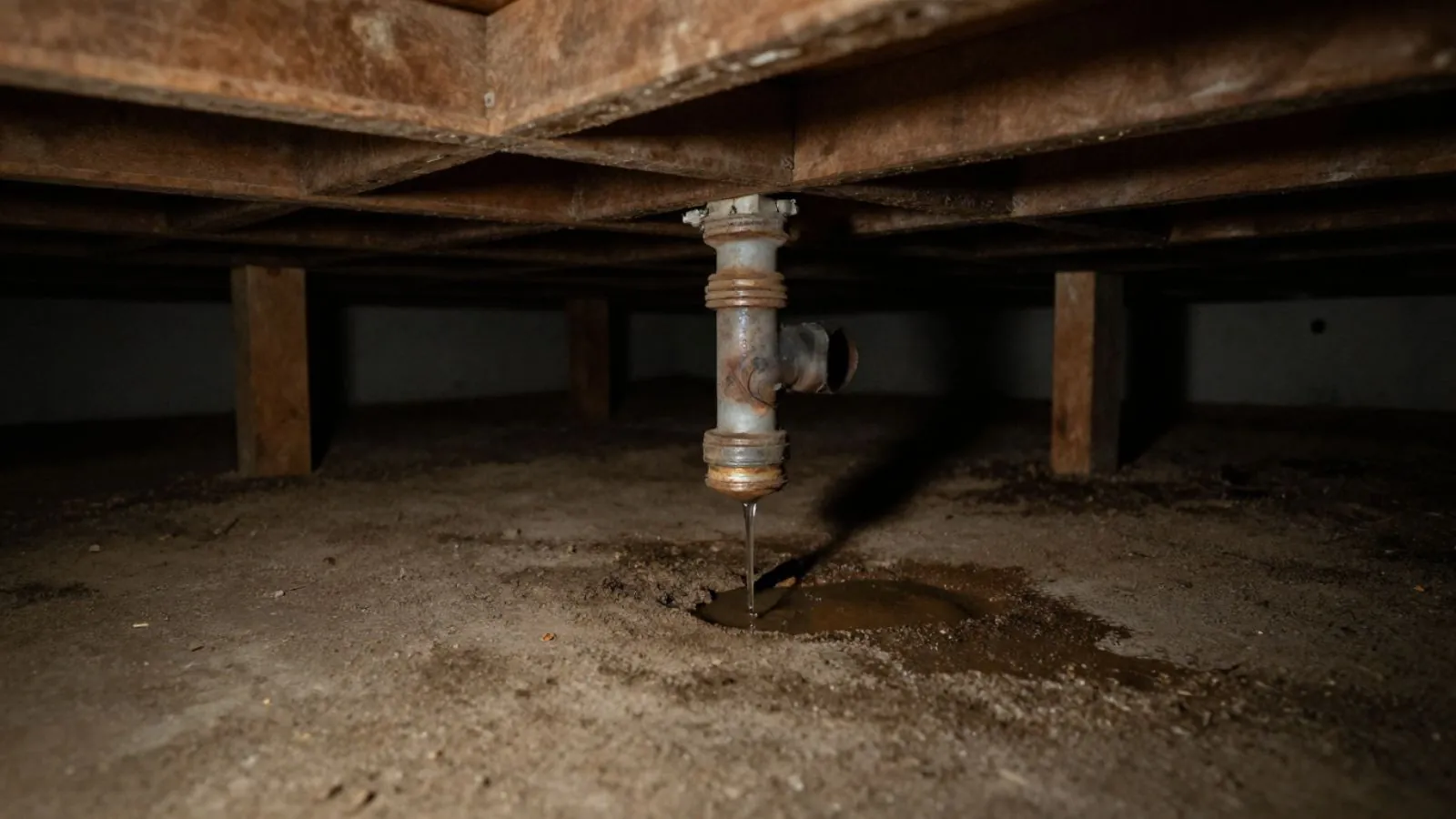
Crawl space water damage in Wheeling, WV
Crawl space water damage is the standing water, damp soil and moisture in framing that happens in the shallow void under a floor. In Wheeling, WV, homes on hillsides and older houses are often built over crawl spaces, and the water comes from several directions at once. Rain runoff, a leaking pipe, a high water table or plain humidity can each be the cause.
This page is about the under-floor void. A full height basement is a different space and is covered on the basement page.
What water in a crawl space looks like
You may notice a musty smell inside the house, floors that feel cold or spongy, doors that stick, condensation on ducts and sagging insulation hanging from the joists. Pooled water or damp soil is the clearest sign. Look in with a flashlight rather than just peeking from the access hatch.
Check along the foundation wall for stains that show where water has entered. Dark rings on the joists and moisture on the subfloor above show how long the problem has been going on.
Where crawl space water comes from
| Source. | What to look for. | Usual fix. |
|---|---|---|
| Surface runoff. | Water enters at a wall or vent after rain. | Grading, gutters and downspouts. |
| Plumbing leak. | Drips from supply or drain lines. | Plumber repairs the line. |
| High groundwater. | Water rises from the soil floor. | Drainage and a sump system. |
| Humidity and condensation. | Damp air, wet ducts, no standing water. | Vapor barrier and ventilation control. |
| Flood or river event. | Water over the soil floor. | See flood damage cleanup. |
Because the sources overlap, the first step is to find which one is active. A moisture meter and an inspection with a light show where water is coming from.
Cleanup and drying
Crews extract standing water with a small pump, remove wet insulation, then dry the soil, the joists and the subfloor with air movers and a dehumidifier. Wet fiberglass insulation sags and holds water against wood, so it is usually removed.
Plastic vapor barrier over the soil is checked and replaced if it is torn or missing. Moisture in the joists is monitored with a meter. Wood that stays above a safe level after drying is flagged, and structural concerns should be assessed by a qualified person.
Water table and drainage in the valley
Wheeling sits along the Ohio River and its creeks, and low properties near the river and creek bottoms are more exposed to groundwater and flooding. For the actual flood risk at your address, use the FEMA Flood Map Service Center or ask the City of Wheeling floodplain manager through Building Code Services. Do not rely on neighbors' stories alone.
If your crawl space has repeated water, a drainage plan from a qualified contractor matters more than repeated cleanups. Restoration removes the water and dries the structure, but it does not change the drainage around the house.
Cost factors and insurance
The price depends on how much water is present, how big the crawl space is, how tight the access is, whether insulation must be removed and how many days of drying are needed. Tight access slows the work.
Insurance coverage varies. Sudden pipe failures may be covered, while groundwater seepage and flooding are often excluded. Read your policy or ask your insurer. Want your real number? Call (740) 231-9132.
Related help
If the water came in during a river event, see flood damage cleanup. A leaking pipe under the house may be a burst pipe problem. If the floor above is wet, hardwood and carpet are the next pages to check.
Safety checks before you start on crawl space water damage
- Do not enter a crawl space with standing water or exposed wiring..
- Turn off power to sump pumps and lights only after checking that the area is safe from the doorway..
- Use a mask and gloves if you must look inside, and never go in alone..
- Watch for sharp debris, loose insulation and animals..
If you are not sure a step is safe, skip it and call. Photographs and a clear description of the water are enough for the dispatcher to plan the work.
Questions about Crawl Space Water Damage in Wheeling
Is water in a crawl space an emergency?
It can be. Active pipe leaks or rising water should be handled right away, and the dispatch line is open 24/7. Slow dampness can be scheduled, but it should not be ignored.
Can I pump out a crawl space myself?
A small amount of water can be removed with a sump pump or a wet vac. Be careful with electrical hazards and tight spaces, and never use a household vacuum in standing water.
Does wet insulation need to be replaced?
Usually yes, because it sags and traps water against wood. Dry fiberglass can sometimes be reused, but wet batts are normally removed.
What is a vapor barrier?
It is a plastic sheet over the soil that slows moisture rising into the space. Torn or missing sheets let more humidity in.
Does insurance cover crawl space flooding?
Flood and groundwater damage are often excluded from standard policies. Sudden pipe leaks may be covered. Check your policy and ask your insurer.