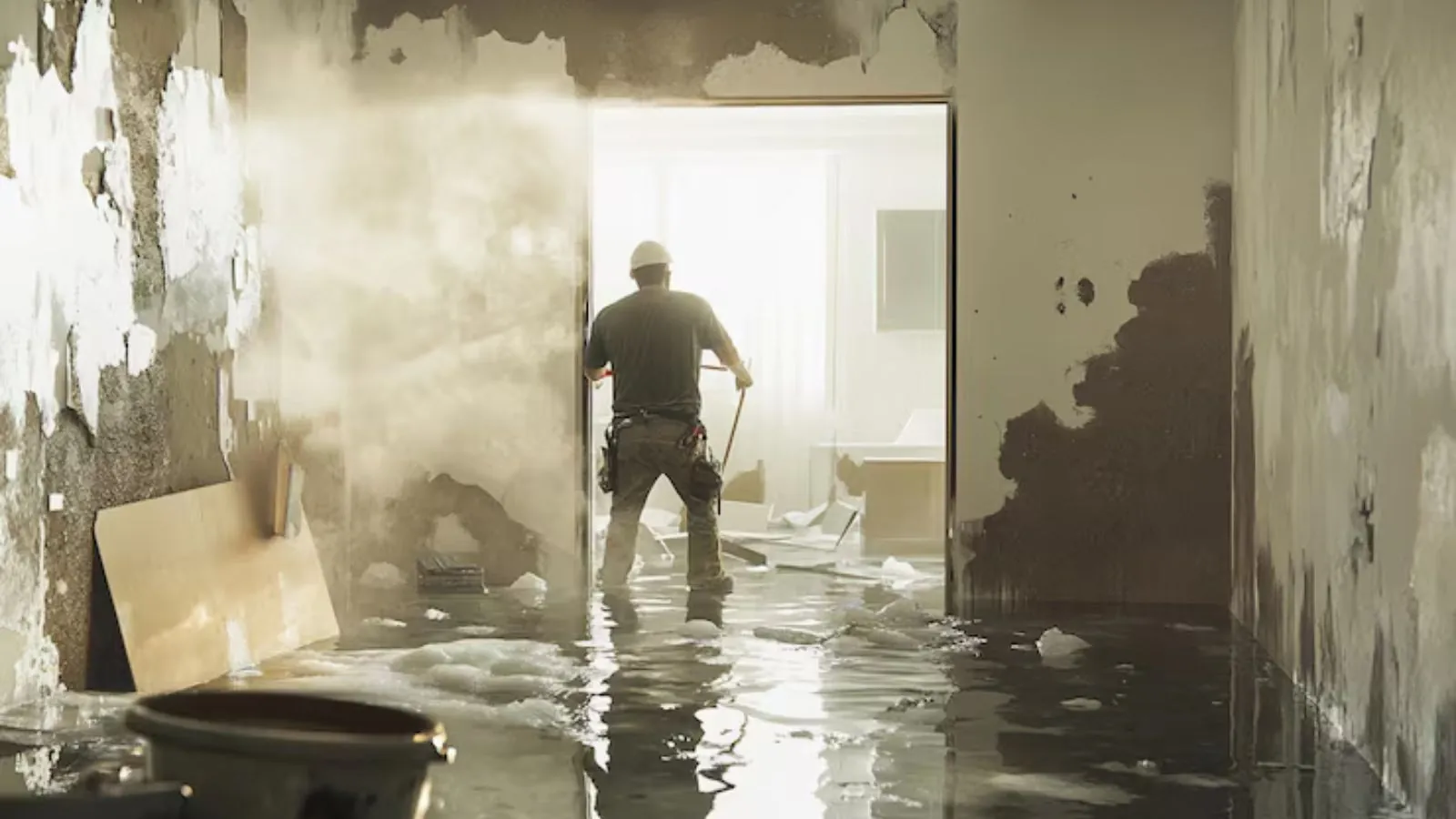
Wall and drywall water damage repair in Wheeling, WV
Wall and drywall water damage repair is the drying, cutting out and replacement of drywall, baseboards and insulation after water gets into a wall. In Wheeling, WV, drywall gets wet from plumbing leaks, window and roof leaks, flooding at the floor and humidity. Water travels into the wall from above, below or the side.
Drywall is gypsum between sheets of paper. It loses strength when wet and holds moisture against the framing, which is why the damage matters beyond the surface.
Signs of water in a wall
- Bubbling, peeling or stained paint..
- A soft spot or a bulge in the drywall..
- Water stains on baseboards or at the bottom of the wall..
- A musty smell near the wall..
- Cracks or nail pops along seams..
- A damp wall that does not dry between rains..
Wicking and the flood cut
Drywall wicks water up from the floor, often 12 to 24 inches above the visible waterline. That is why a flood cut is made. Crews cut the drywall horizontally above the wet line, remove the wet section and the insulation behind it, and let the cavity dry.
| Condition. | Typical action. | Why. |
|---|---|---|
| Stain only, meter reads dry. | Seal and paint. | No water remains. |
| Wet, clean water, caught fast. | May dry in place with holes drilled for airflow. | Gypsum can recover if dried quickly. |
| Wet for days or contaminated. | Cut out and replace. | It will not dry reliably. |
| Wet insulation. | Remove. | It holds water against the framing. |
The repair steps
After drying, the repair has four steps. New drywall is hung to the studs, seams are taped and mudded, the surface is sanded and primed, and then it is painted. Baseboards and trim are reinstalled. Textured walls need matching.
Painting over a wet wall hides the problem. Wait for a meter reading that shows the wall is dry before sealing it.
Hidden sources
The wall might be wet from a leak you cannot see. Check the plumbing behind the wall, the window above, the roof above and the outside siding. A stain that returns after repair means the source is still active. The source may be a plumber's job or a roofer's, not a restoration job.
Walls in older Wheeling buildings
Older Wheeling houses may have plaster and lath instead of drywall. Plaster can be dried and repaired by a skilled plasterer, and replacing it with drywall is a larger decision. If your wall is plaster and it is wet, ask the crew how they handle it. The City of Wheeling requires a permit for structural, electrical, plumbing or building alterations, so ask the Building Code Services office whether your repair needs one.
Cost factors and insurance
Cost depends on how many square feet are removed, the finish, the number of coats, the drying time and trim. Insurance often covers sudden water damage and excludes long term seepage. Read your policy or ask your insurer. For a real number, call (740) 231-9132.
Related help
Walls often get wet from a burst pipe, a ceiling leak or a kitchen leak. Drying is explained on the structural drying page.
Deciding whether to cut or dry
Drywall that is wet for a short time with clean water can sometimes be dried in place. Drying holes, wall cavity drying systems or removing the baseboard may allow air to flow into the cavity. Drywall that has swollen, crumbled or stayed wet for several days is usually cut out, since it loses strength and can grow mold.
Insulation inside the wall is handled differently. Fiberglass batts can be dried if clean, while cellulose and spray foam may need removal. The crew decides by reading moisture on the studs and the back of the wall board.
What the repair looks like
- Cut out the wet section along a stud so the patch has solid support..
- Dry the cavity and the framing until readings are normal..
- Install new board, tape and finish the seams..
- Prime and paint the whole wall for an even look..
Skipping the drying step and patching too soon is the most common mistake. Paint over damp board traps moisture and brings the stain back.
Safety checks before you start on wall and drywall water damage
- Do not cut into a wet wall near outlets, switches or the panel..
- Wear a mask, gloves and eye protection when removing wet drywall..
- Check for wiring or pipes before cutting..
- Bag debris and keep it away from living areas..
If you are not sure a step is safe, skip it and call. Photographs and a clear description of the water are enough for the dispatcher to plan the work.
The ANSI/IICRC S500 standard helps decide whether drywall can be dried in place or must be removed, based on the category of water and how long it stayed wet.
Questions about Wall and Drywall Water Damage in Wheeling
How high does water wick in drywall?
It can wick higher than the visible waterline, often a foot or two. A moisture meter finds the limit.
Can I paint over a water stain?
Only if the wall is dry and the source is fixed. Otherwise the stain returns.
Is wet drywall always replaced?
No. Clean water caught fast can sometimes be dried in place. Wet for days or contaminated drywall is replaced.
What is a flood cut?
It is a straight cut made above the wet line so wet drywall and insulation can be removed and the cavity dried.
Does insurance cover water damaged walls?
Sudden water damage is often covered. Read your policy or ask your insurer.