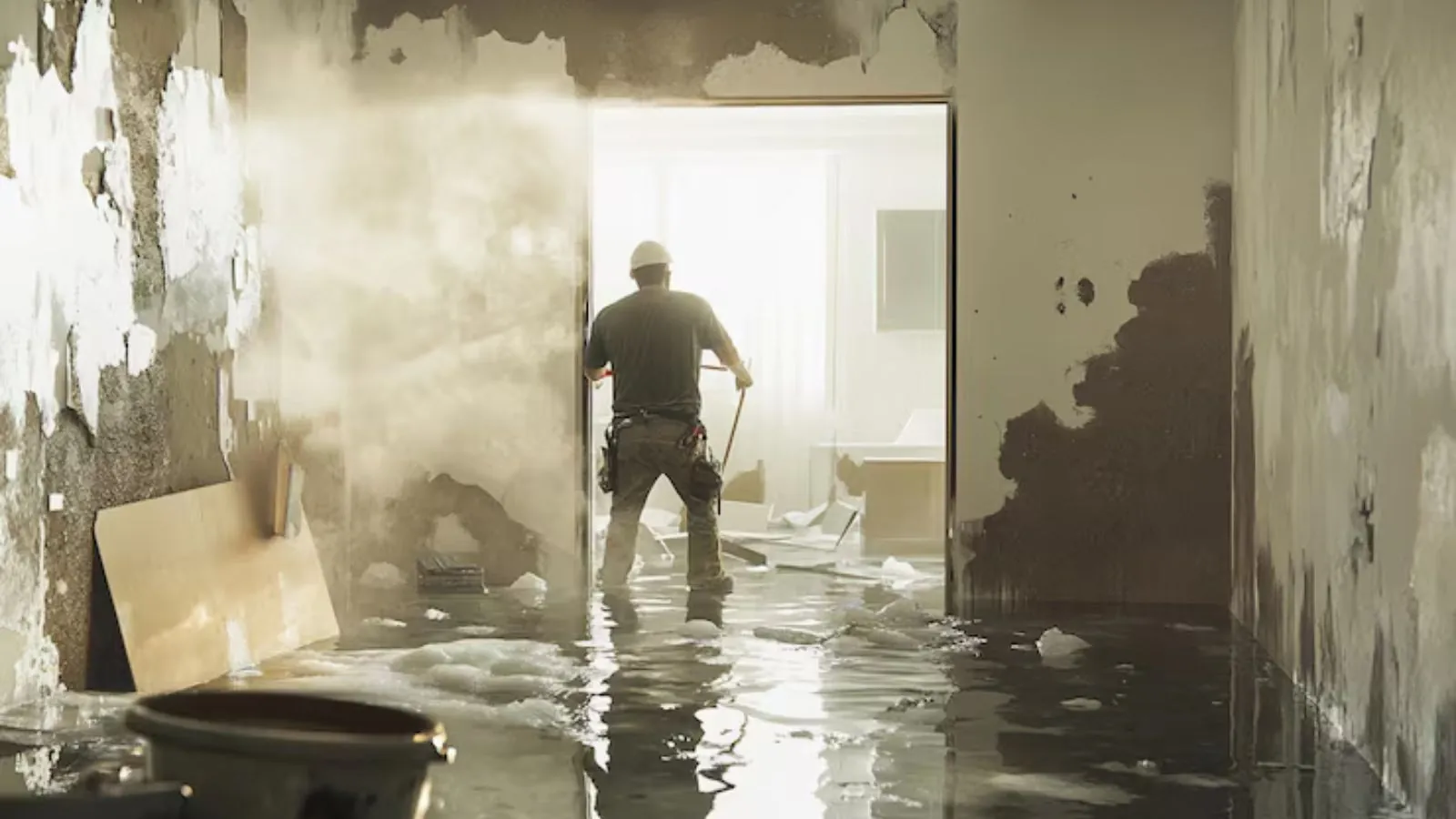
What a scope of work is
A scope of work is a written list of what a contractor will do, in which rooms and with which materials and equipment. It is the document your insurer will review and the one you can use to compare quotes. It is different from an invoice. The scope comes before the work, and the invoice comes after.
Scopes for water damage often have a mitigation part, covering water removal and drying, and a repair part, covering replacement of finished materials. They may be written together or in two documents.
Typical sections
- Project information: address, date of loss, source of water and the water category..
- Areas affected: a list of rooms with measurements..
- Work to be done: extraction, removal, cleaning and drying, room by room..
- Materials removed: such as drywall, insulation and carpet pad, with quantities..
- Equipment: air movers, dehumidifiers and monitoring devices..
- Schedule: days of drying and the plan for monitoring..
- Exclusions and assumptions: what is not covered and what could change..
- Price: by line item or by phase..
Terms you may see
| Term. | Plain meaning. |
|---|---|
| Category 1, 2 or 3. | Clean, gray or contaminated water. |
| Class 1 to 4. | How much water was absorbed and how fast it will evaporate. |
| Flood cut. | Cutting drywall above the water line to remove wet material. |
| Air mover. | A fan that moves air across wet surfaces. |
| LGR dehumidifier. | A low grain refrigerant dehumidifier that removes moisture from the air. |
| Moisture mapping. | Taking readings across surfaces and recording them. |
| Pack out. | Moving contents to a safe place. |
| Antimicrobial. | A treatment applied to limit growth on surfaces. |
Classes and categories come from the ANSI/IICRC S500 standard. The pages on water extraction and structural drying show how each is applied.
Questions to ask before approving
- Why were these rooms and materials chosen?.
- How many days of drying are planned and how will you know when it is done?.
- What readings are the targets?.
- What happens if hidden damage is found?.
- Who will handle permits if needed?.
- Can I see the moisture readings during the job?.
- What is not included and who will do the rebuild?.
Comparing a scope to the insurer estimate
Insurers write estimates using their own software and prices. A contractor scope may list different quantities or items. If they disagree, ask what is different. It may be a measurement, a material or a step that the insurer did not see. Share photos and moisture logs that support your scope. The goal is for both documents to describe the same work.
Keep the scope updated
Scopes change. If the crew finds hidden water or the drying takes longer, the scope should be updated in writing. Ask for a change order for added work and keep copies. If you approve a change over the phone, ask for an email confirmation.
A line by line example
A typical line might read, "Remove and dispose of 4 feet of wet drywall along the north wall, kitchen, 12 linear feet." Break it down. The action is remove and dispose. The material is drywall. The height and length give the area. The location tells you where. If any of these are missing, ask.
Another line might read, "Place 3 air movers and 1 LGR dehumidifier for 3 days." Ask how those numbers relate to the room size and the wet area. The standard approach sets equipment based on the volume of the space and the class of water loss.
Equipment lines usually come with monitoring. Look for a line about daily readings or visits. Without it, you cannot tell when drying is complete.
Signing and keeping a copy
Sign only when you understand each section. Ask for a clean copy of the signed scope and keep it with your claim papers. If anything changes, ask for an updated copy.
Red flags inside a scope
- A scope with no room names or measurements..
- Equipment listed without a number of days..
- A line that says "demo as needed" with no limit..
- No mention of moisture readings or a drying goal..
- A total price with no way to tell which lines make it up..
Any of these can be fixed by asking. A good contractor will add detail without fuss. If a company resists writing down what it plans to do, that tells you something useful before you sign.
Photos help in both directions. Ask the crew to attach photos to the scope showing the areas it refers to, such as the wet wall or the damp subfloor. Photos tie each line to a real condition, and they give your insurer a clear picture.
When your insurer asks for changes
Sometimes the insurer will approve only part of a scope. Ask for the reason in writing and share it with the contractor. The contractor may be able to supply readings, photos or a short explanation that supports the line in question. If the two sides still disagree, ask what the policy says about the item and whether there is an appeal process.
Local note for Wheeling, WV
The City of Wheeling asks permit applicants to submit an application, a drawing, a materials list and a scope of work, and to display the permit at the work location until the project is complete. A clear scope is therefore useful twice, for your insurer and for the city. The city also says involving the Inspection Division early may help reduce time, cost and delays.
Property owners in Triadelphia and Glen Dale should ask their town or city office about its permit rules, since they are separate from Wheeling.
Common questions
Who writes the scope of work?
Usually the restoration contractor. Your insurer may write a separate estimate.
What is a change order?
A written update to the scope when work or price changes.
Can I ask to see readings?
Yes. Moisture readings are part of the documentation.
Does Wheeling want a scope with a permit application?
Yes. The city lists a scope of work among the materials submitted with a permit application.